

Top 10 EV SUVs
Looking For The Best Electric SUVs In The UK Right Now? Here They Are...
1 Minute Read
If you are looking at electric SUVs in the UK right now, the challenge is no longer finding a good option. It is choosing between a growing number of genuinely capable ones.
The market has moved on quickly. What was once a niche category is now one of the most competitive parts of the car market, with options ranging from compact daily drivers to long-range family SUVs that handle motorway miles with ease.
Models like Tesla Model Y, Hyundai Ioniq 5 and Kia EV6 still set the pace in key areas such as range, charging and overall usability. At the same time, newer entrants like Omoda E5 and Jaecoo J7 are starting to offer strong value with high levels of standard equipment.
Each model approaches things slightly differently. Some prioritise efficiency and charging convenience, others focus on comfort, space, or driving feel. The right choice usually comes down to how well a car fits into your everyday routine rather than headline figures alone.
Real-world range is typically lower than official figures, public charging access still varies depending on location, and interior usability often matters more than buyers expect. For most drivers, something in the 250 to 300-mile range bracket is already more than enough for day-to-day use.
With more brands entering the market and government policy continuing to push electrification, electric SUVs are quickly becoming the default choice for many buyers. More choice is a good thing, but it also makes it more important to focus on what actually matters.
Introduction
In the early days, choosing an electric car, let alone an SUV, meant picking between a number of early adopters. Options were limited, leaving many buyers essentially stepping into the motoring unknown.
Gladly, that’s a thing of the past, with EV options changing almost daily.
Today, electric SUVs cover everything from compact urban options to long-range, ultra-luxury wagons that feel at home on longer motorway drives. Household manufacturers have refined their offerings, while newer brands are entering the market with competitive pricing and surprisingly well-equipped models.
Names like Omoda and Jaecoo are now part of the conversation, alongside more familiar European, Korean and American brands. For buyers, that means more choice, but also more to weigh up.
This guide focuses on ten of the most relevant electric SUVs on the market right now, balancing range, usability, practicality and overall value.
1. Tesla Model Y
The Tesla Model Y still sets a very high bar for what an electric SUV should be, particularly if you cover longer distances regularly.
What makes it stand out is how straightforward it feels to live with. Range is strong in real-world conditions, efficiency is consistently good, and the Supercharger network removes much of the uncertainty around long-distance driving. It is one of the few EVs where you spend less time thinking about charging and more time just using the car.
Official figures point to over 300 miles for the Long Range model, although most drivers will see slightly less depending on conditions.
Inside, everything runs through the central touchscreen. That will not suit everyone, but the system is fast, responsive and improves over time through updates. Space is another strong point, with a large boot, additional front storage and a flat rear floor making it particularly practical.
Beware of residual values though, Teslas notoriety means fluctuating resale prices.
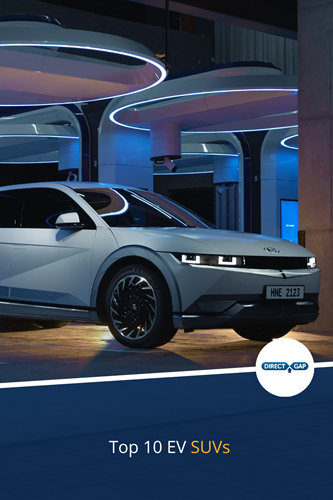
2. Hyundai Ioniq 5
The Hyundai Ioniq 5 still feels different in a good way.
Its biggest advantage is charging speed. The 800V platform allows very fast charging on compatible rapid chargers, with 10 to 80 percent possible in under 20 minutes in the right conditions. That changes how you approach longer journeys, especially compared to older EVs.
Inside, the focus is clearly on space and flexibility:
- Flat floor layout
- Sliding centre console
- Relaxed seating position
It is one of those cars that tends to feel bigger on the inside than you expect, which makes it particularly well-suited to families or regular long trips.
Another great benefit of the Ioniq 5 (and many Hyundais) is the warranty, covering 5 years generally and 8 years for batteries.
3. Kia EV6
The Kia EV6 shares much of its underlying technology with the Ioniq 5, but comes across as the more driver-focused option.
Range sits comfortably in the low 300s, depending on the version, and it is consistently efficient in mixed driving. Where it really separates itself is on the road. Steering feels more direct than many rivals, and there is a level of responsiveness that you do not always get in electric SUVs.
It also brings a strong all-round package, combining fast charging capability with solid build quality and a long warranty. For drivers who still want some enjoyment behind the wheel without sacrificing practicality, it tends to hit the mark.
4. Skoda Enyaq
The Skoda Enyaq focuses on what many buyers actually need rather than what looks good on paper.
It is built around usability. The interior is spacious, the layout is logical, and there is a sense that everything has been designed with everyday life in mind. Rear passengers have plenty of room, and the boot is large enough to handle most family situations without compromise (something we’ve put into practice many times with ease).
Range can reach up to around 330 miles in higher-spec versions, which makes it more than capable for longer journeys. It is not the most exciting option here (unless you fork out for the brilliant vRS), but it is one of the easiest to recommend if practicality is your priority.
5. Ford Mustang Mach-E
The Ford Mustang Mach-E brings a slightly different feel to the segment, leaning more towards performance than many similarly sized SUVs.
Acceleration is strong across the range, and it feels more composed through corners than you might expect. It is one of the few electric SUVs that genuinely encourages you to enjoy driving it rather than simply getting from A to B.
Range varies between roughly 270 and 370 miles, depending on battery choice, giving it plenty of flexibility depending on how you plan to use it.
Inside, the large central screen dominates, but Ford has kept some physical controls where they matter. It is a good balance between modern design and usability.
We’ll leave you to decide whether this iteration is truly a Mustang though.
6. Volkswagen ID.4
The Volkswagen ID.4 takes a more straightforward approach, and that is exactly where its appeal lies.
It feels familiar from the moment you get in. The driving experience is smooth, visibility is good, and it does not take long to adjust if you are coming from a petrol or diesel SUV. That alone makes it a popular stepping stone into electric driving.
Key strengths include:
- Comfortable ride quality
- Spacious rear seating
- Easy, predictable driving experience
It may not stand out in any one area, but it does most things well, which is often what matters most day to day.
7. BMW iX1
The BMW iX1 shows that smaller electric SUVs do not have to feel like a compromise.
Despite its more compact size, it delivers a premium experience both in terms of interior quality and how it drives. There is a level of refinement and responsiveness here that you would expect from the brand, and it carries over well into the electric version.
Range sits around 260 to 270 miles, which is more than enough for most daily use, particularly if you have access to home charging.
BMW are renowned for quality and, despite challenges from plenty of EV newcomers, with the iX1, they’ve shown they can still compete.
8. Nissan Ariya
The Nissan Ariya takes a calmer approach than many rivals, focusing more on comfort than performance.
On longer journeys, that becomes its main strength. The cabin is quiet, the ride is smooth, and there is a noticeable sense of refinement that makes it easy to spend time in.
The interior has a more relaxed, almost lounge-like feel:
- Minimalist layout
- Soft-touch materials
- Subtle ambient lighting
Higher-capacity versions approach 300 to 330 miles of range, which puts it comfortably in line with most alternatives in this segment. It is not trying to be the sportiest option, but it is one of the most comfortable.
Another thing to consider with the Ariya is the Nissan backing. They’ve repeatedly made top 10 best seller lists in the UK, which means you should find parts and repair much easier.
9. Omoda E5
The Omoda E5 (which seems to be all over social media at the moment) represents a newer wave of electric SUVs entering the UK market, and it reflects how quickly things are changing.
Rather than competing directly on brand recognition, it focuses on offering strong value. The level of standard equipment is high, the design feels modern, and pricing is positioned to attract buyers who might otherwise look at more established names.
Range is expected to sit around 250 to 280 miles, which is enough for most households. It is unlikely to lead the segment in any one area, but taken as a whole package, it makes a strong case for itself.
10. Jaecoo J7 (Electric Variant)
The Jaecoo J7 is another example of how quickly new manufacturers are entering the market.
It takes a slightly different approach in terms of design, with a more upright and rugged look compared to many electric SUVs. That alone will appeal to buyers who prefer a more traditional SUV shape. In fact, its already been billed as the ‘baby Range Rover’ (we hope for it’s styling and not it’s reliability).
Electric versions form part of its wider rollout, with a focus on combining strong technology with everyday practicality. It is still early days, but models like this highlight how much more competitive the market is becoming.
What Actually Matters When Choosing An EV?
With so many options available, it is easy to focus on headline figures. Range, acceleration and charging speed all matter, but they are only part of the picture.
In practice, a few key factors tend to make a bigger difference.
Real-World Range vs Official Figures
Official WLTP figures are measured under ideal conditions, so real-world range is usually lower.
In the UK, average daily mileage is around 20 miles, which helps put range into perspective.
|
Official Range |
Real-World Estimate |
What It Covers |
Suitability |
|
200–250 miles |
~160–210 miles |
Several days of typical driving |
Urban use, short commutes |
|
250–300 miles |
~200–260 miles |
Full week without charging |
Most households |
|
300–350 miles |
~240–300 miles |
Longer motorway trips |
Frequent long-distance drivers |
|
350+ miles |
~280–320+ miles |
Petrol-like flexibility |
High-mileage users |
Driving style, weather and motorway use will all affect these figures.
Charging Access
The UK public charging network continues to expand, with tens of thousands of public charge points now available. Availability and reliability can still vary depending on location, particularly outside major urban areas.
For most owners, home charging remains the most convenient option. It is also significantly cheaper in most cases, typically working out at around 7p to 10p per mile for many EVs, compared to roughly 15p to 20p per mile for petrol SUVs of a similar size.
Interior Space and Usability
Day-to-day usability matters.
Boot shape, rear legroom and storage solutions all have a bigger impact over time than raw size figures. A well-designed interior will usually feel easier to live with, even if it is not the largest in its class.
Software and Ownership Experience
Modern EVs rely heavily on software, and this is an area where differences between models can become more noticeable over time.
Infotainment systems, app connectivity and over-the-air updates all play a role in how the car feels after a few months or years of ownership, not just on the first drive.
It’s also worth considering whether a fully touchscreen system is right for you.
Our Final Word
Electric SUVs are no longer a niche option. For many buyers, they are becoming the default choice when replacing a car.
The government's target to phase out new petrol and diesel sales is pushing manufacturers to expand their electric line-ups, while competition continues to increase.
Established brands are refining what they already do well, and newer entrants are arriving with competitive pricing and strong equipment levels. For buyers, that competition is positive. It means more choice, better value and faster progress across the market.
The result is a segment that feels far more mature than it did even a few years ago. If the current pace continues, the next wave of electric SUVs will be even harder to separate.
Pin It!

Luke Sanderson
Luke is our resident copywriter, combining plenty of automotive experience, particularly in car sales with a commitment to well-researched, extensive writing. He draws on his own experiences, as well as quizzing the entire team at Direct Gap to ensure the blogs and articles you read are worthwhile, valuable and accurate. Got a question for Luke? Drop us a DM on social media and he'll be happy to help.