

The Top 10 EV Family Cars
Quick Links
- Looking For An Electric Family Car? Try These
- Do Electric Cars Actually Work For Everyday Family Life?
- Will Charging Be A Hassle With Kids In The Car?
- Top 10 EV Family Cars for Real Life in the UK
- 1. Skoda Enyaq iV
- 2. Tesla Model Y
- 3. Kia EV9
- 4. Volkswagen ID. Buzz
- 5. Hyundai Ioniq 5
- 6. MG5 EV
- 7. BMW iX1
- 8. Volvo EX30
- 9. Nissan Ariya
- 10. Peugeot e-5008
- Practical things to think about before choosing
- Final Thoughts
Looking For An Electric Family Car? Try These
For years, choosing a family car was mainly about one thing: space. Space for prams that never fold as neatly as advertised, school bags that multiply overnight, muddy football boots and a weekly shop that somehow fills any boot you give it.
Electric cars have added a new layer to that decision. Not just can it fit everyone in? But will it cope with our lives? School runs, long motorway drives, rainy service stations, tight parking bays and the occasional family holiday that tests both patience and range.
The good news is that electric cars have quietly grown up. Early EVs often felt like clever experiments, impressive, but compromised. Today’s electric family cars are bigger, more comfortable and far more usable. You no longer have to be an enthusiast or an early adopter. You just have to want a car that works.
We’ve compiled our top ten electric cars that genuinely make sense for family life in the UK, not just on paper, but in the real world. First, though, let’s cover some of the basics.
Do Electric Cars Actually Work For Everyday Family Life?
This is usually the first question families ask, and it’s a fair one. School runs, after-school clubs, weekend trips and the odd long motorway journey don’t leave much room for compromise. The reality is that most UK families drive far less each day than they think. According to Department for Transport data, the average daily mileage is well within the range of even modest electric cars. That means for many households, an EV is charged overnight at home and simply ready each morning, no detours to petrol stations required.
The key difference is mindset. Instead of waiting until the car is nearly empty, you top up little and often. Once that becomes normal, many families find electric cars fit into daily routines more smoothly than petrol or diesel ever did.
Will Charging Be A Hassle With Kids In The Car?
Charging is often seen as the biggest concern, especially when travelling with children. In practice, it’s less about how fast the car charges and more about how predictable the stop is. Rapid chargers at motorway services are now common across the UK, and most modern family EVs can add enough range during a short break for snacks and toilets to get you comfortably back on the road.
For everyday use, home charging makes the biggest difference. Plugging in overnight removes nearly all of the inconvenience people worry about. Even without a driveway, many families successfully rely on workplace charging or local public chargers. The experience isn’t perfect everywhere yet, but it’s far removed from the early days of EV ownership.
If you want to learn more about charging, read our guide: EV Chargers | Everything You Need To Know.
What About EV Depreciation?
Although residual values for EVs are levelling out a little, thanks to battery life data making things clearer, they, like all cars, are still prone to depreciation.
The average EV will lose around 15-35% of its value in their first year, rising to around 50% in year three. As a lot of electric cars tend to be more expensive than their fossil fuel counterparts, this means that the value in real terms is quite significant. Gap insurance for EVs is worth considering if you're worried about this, effectively covering that loss, paying the difference between the current market value and the amount you paid or still owe, if your car is written off.
Top 10 EV Family Cars for Real Life in the UK
1. Skoda Enyaq iV
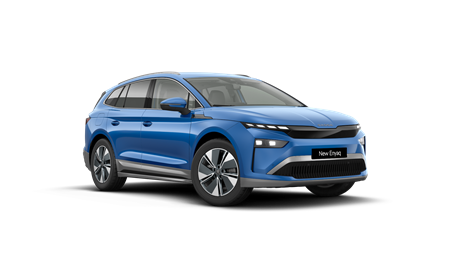
If there’s one manufacturer that consistently understands families, it’s Skoda. The Enyaq iV feels like the electric evolution of everything people like about the Octavia and Kodiaq.
It’s roomy without being intimidating, and the boot is the kind you can actually use without playing luggage Tetris. Inside, it’s refreshingly sensible. There are physical buttons where you expect them, decent storage everywhere, and nothing feels overdesigned for the sake of it.
In real-world UK driving, most versions manage around 250–300 miles depending on wheels and weather, which comfortably covers school runs, commuting and weekend trips. Reviews from outlets like What Car? consistently praise its practicality over flashy gimmicks, and for a family car, that’s exactly the point.
Best for: Families who want space and calm, not drama.
2. Tesla Model Y
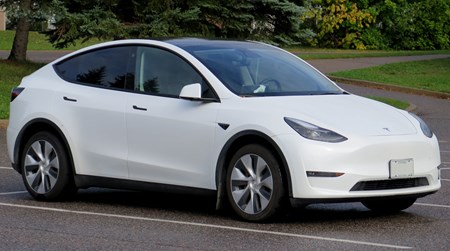
The Tesla Model Y is often described as the obvious choice, but obvious isn’t a bad thing when it works this well.
Space is the headline. The boot is huge, there’s additional storage under the floor, and legroom is generous front and back. It’s also one of the most efficient electric SUVs on the motorway, which matters if your family life involves regular long drives.
The biggest advantage, though, is charging. Tesla’s Supercharger network across the UK removes a lot of anxiety from family road trips, something Autocar frequently highlights. The interior divides opinion, especially if you miss physical buttons, but many families adapt quickly.
One thing to keep in mind if you are tempted by a Tesla. The brand as a whole seems to be susceptible to price fluctuations on the used car market, so you should be prepared for some higher-than-average depreciation levels when you come to sell.
Read More: How Much Do Electric Vehicles Depreciate?
3. Kia EV9
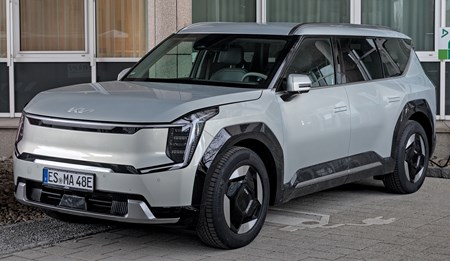
If you genuinely need seven seats, the Kia EV9 deserves serious attention. It’s large, there’s no pretending otherwise, but that size delivers real benefits.
You get three usable rows of seats, strong towing capability (up to 2,500kg, which is rare for an EV), and a relaxed, quiet ride, which sounds like the perfect mix for weekend caravan trips with the family.
Despite its footprint, visibility is good, and driver aids help in tighter spaces.
It’s expensive, but as an electric alternative to a diesel seven-seat SUV, it finally feels like a proper option rather than a compromise.
Less ideal if: You live in an older area with tight parking or narrow streets.
4. Volkswagen ID. Buzz
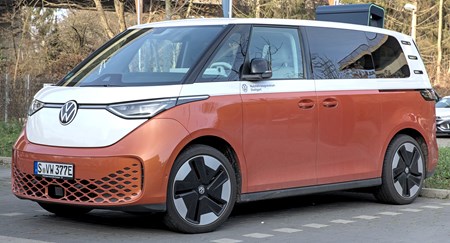
Few cars make people smile before you even get in them. The ID. Buzz does, and that shouldn’t be underestimated when family life can feel relentlessly practical.
Under the retro styling is a genuinely useful MPV. There’s loads of headroom, a flat floor that’s perfect for child seats, and flexible seating for growing families. Range is decent rather than class-leading, but for urban and suburban use it’s rarely a problem.
Volkswagen’s broader EV ownership guidance, along with UK infrastructure support outlined on gov.uk, helps explain why vehicles like this suit everyday family life.
Best for: Families who value space, flexibility and character in equal measure.
5. Hyundai Ioniq 5
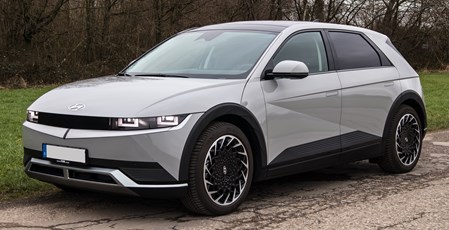
The Ioniq 5 doesn’t look like a traditional family car, and that’s part of its appeal. Inside, it’s airy, comfortable and far more practical than the exterior suggests.
The flat floor makes moving between seats easy, and the sliding centre console is genuinely useful when juggling passengers. One standout feature is charging speed: on a rapid charger, it can add a meaningful amount of range during a short stop. When you’ve got impatient children in the back, that matters.
It’s also very comfortable over longer distances, striking a rare balance between daily usability and road-trip readiness.
6. MG5 EV
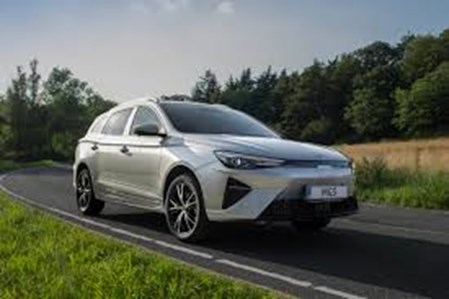
Not every family wants an SUV. The MG5 EV remains one of the very few electric estate cars available in the UK, and that alone earns it a place here.
It’s refreshingly honest. The boot is long and low, ideal for prams, dogs or bikes, and running costs are impressively low. Real-world range typically sits around 220–250 miles, which suits most daily routines.
It won’t win design awards, but consumer-focused reviews from Which? regularly rate it highly for value and usability.
Best for: Families who prioritise function over fashion.
7. BMW iX1
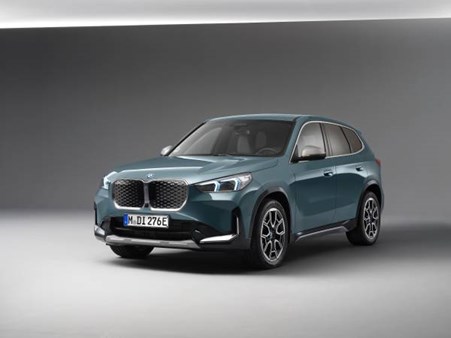
The BMW iX1 doesn’t shout “family car”, but it’s more capable than it first appears. Rear seat space is good enough for child seats, and the boot easily handles everyday family needs.
What sets it apart is how it drives. If you still enjoy being behind the wheel, the iX1 feels reassuringly familiar. For families moving from a petrol or diesel BMW, it’s a natural transition rather than a radical rethink.
Trade-off: Less outright space than larger SUVs, but more engaging to drive.
8. Volvo EX30
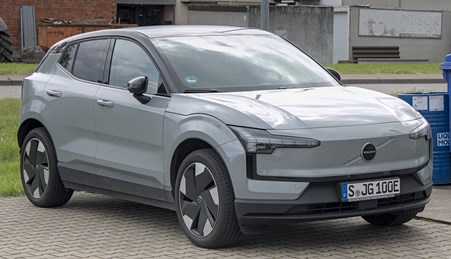
On paper, the Volvo EX30 looks small. In practice, it works surprisingly well for smaller families or those with younger children.
Volvo’s reputation for safety remains a huge draw, with advanced driver assistance features coming as standard. The interior feels calm and thoughtfully designed, even if boot space is limited.
Its efficiency around town is excellent, meaning lower energy use and cheaper running costs over time, something many UK families will appreciate.
9. Nissan Ariya
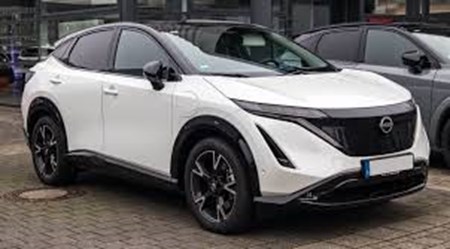
The Ariya represents a more mature phase of Nissan’s electric journey. It’s not flashy, but it is comfortable, refined and well suited to longer journeys.
Rear seat space is generous, road noise is low, and the overall experience feels relaxed rather than tech-heavy. It doesn’t chase headline-grabbing specs, but that restraint works in its favour.
Ideal for: Families who do regular motorway miles and value comfort over novelty.
10. Peugeot e-5008
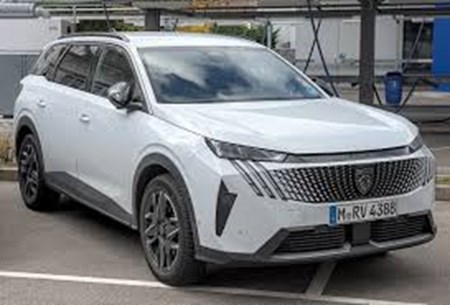
Seven seats again, but in a slightly more compact-feeling package than some rivals. The e-5008 is designed for families who need flexibility without driving something enormous.
The interior layout is clever, with multiple seating configurations. Peugeot’s i-Cockpit divides opinion, but many drivers find it intuitive after a short adjustment period. Range is competitive, and practicality is strong.
It’s another sign that electric cars are no longer just city runabouts, they’re becoming genuine family workhorses.
Practical things to think about before choosing
Range figures are only half the story for families. In day-to-day UK use, charging speed, connector type and where chargers are typically found often matter more than the headline mileage. Understanding how public charging actually works in the UK helps set realistic expectations for family journeys.
Table: UK EV charging types and what they mean in practice
| UK charging type | Typical power range | Where families usually encounter it | What it means in real life |
|---|---|---|---|
| Home wallbox (AC) | 7 kW (single phase) | Driveways, garages | Adds roughly 20–30 miles of range per hour; ideal for overnight charging and daily routines |
| Public AC (Type 2) | 7–22 kW | Supermarkets, leisure centres, hotels | Useful for longer stops; often free or low-cost but not fast |
| Rapid DC | 50 kW | Motorway services, A-roads | 30–40 minutes for a meaningful top-up; common but increasingly outpaced by newer chargers |
| Ultra-rapid DC | 100–350 kW | Motorway service areas, major hubs | 15–25 minutes for large range gains on compatible cars; most useful for family road trips |
| Connector standard | CCS (Combined Charging System) | Almost all new UK EVs | The UK and Europe’s default rapid-charging standard |
Before settling on any electric family car, think honestly about how you use your vehicle.
Do you mostly do short local trips with the occasional long journey, or are motorway miles part of your weekly routine? Home charging availability matters more than headline range figures, something the Energy Saving Trust consistently highlights in its UK EV guidance.
Boot shape matters too. A slightly smaller but well-shaped boot can be more useful than a larger, awkward one. If you rely on roof boxes, remember that they can reduce range by 10–20% on the motorway. Towing, winter range and child-seat compatibility are also worth checking early.
Public charging with children adds another layer. Shorter charging times, nearby toilets and predictable stops can make a bigger difference than an extra 30 miles of quoted range.
Final Thoughts
Electric family cars are no longer niche or experimental. They’re becoming normal, which is probably the strongest endorsement of all.
None of these cars are perfect. Some prioritise space, others efficiency, others long-distance comfort. But all of them are good enough to handle the daily realities of family life in the UK.
And ultimately, that’s what matters most.
Pin It!

Luke Sanderson
Luke is our resident copywriter, combining plenty of automotive experience, particularly in car sales with a commitment to well-researched, extensive writing. He draws on his own experiences, as well as quizzing the entire team at Direct Gap to ensure the blogs and articles you read are worthwhile, valuable and accurate. Got a question for Luke? Drop us a DM on social media and he'll be happy to help.