

Car Safety Ratings & Features Explained
Quick Links
- Do Car Safety Ratings Really Matter If I’m a Careful Driver?
- Are Newer Cars Always Safer Than Older Ones?
- What car safety ratings actually measure
- Passive safety vs active safety (and why the difference matters)
- Passive safety: protection when things go wrong
- Active safety: stopping crashes before they happen
- The active safety features that actually matter
- Autonomous Emergency Braking (AEB)
- Lane keeping assistance
- Blind spot monitoring
- Speed assistance and traffic sign recognition
- Child safety is more than just ISOFIX
- Pedestrian and cyclist protection: an overlooked part of safety
- Why a five-star rating is not the whole story
- Safety Doesn't End At The Crash
- Used cars and real-world safety trade-offs
- The human factor still matters
- Making sense of safety when choosing a car
- Final Thoughts
Cut Through The Jargon With Our Guide To Safety Ratings & Features
1 Minute Read
Car safety has moved from an afterthought to a priority, not because driving is riskier, but because we better understand what actually protects people when things go wrong. Safety ratings, especially Euro NCAP scores, are designed to show how well a car protects occupants, children, pedestrians and cyclists, and how effectively it uses driver assistance systems. The key point is that star ratings depend on when a car was tested, and a five star result alone rarely tells the full story.
Modern safety falls into two areas. Passive safety reduces injury during a crash through strong structures, airbags and seatbelts. Active safety aims to prevent accidents altogether, with features like Autonomous Emergency Braking, lane keeping assistance and blind spot monitoring offering the biggest real world benefits.
Newer cars often excel at preventing crashes, while older well engineered cars can still protect occupants extremely well. The smartest choice depends on how and where you drive. Understanding the detail behind the ratings helps you choose safety with confidence rather than assumption.
Introduction
Buying a car used to be about looks, fuel economy and whether the boot would swallow a weekly shop without a fight. Safety was assumed rather than questioned. These days, it sits much closer to the top of the list.
Not because driving has suddenly become more dangerous, but because we now understand far more about what actually keeps people safe when things go wrong.
The problem is that car safety information often feels impenetrable. Star ratings, acronyms, crash tests filmed at odd angles, and after a few minutes, many people simply shrug and assume that a five-star car is a safe one.
Sometimes it is. Sometimes it isn’t.
This guide explains exactly what car safety ratings mean, which features genuinely help, and how to use that information when choosing a car. First though, as we always do, let's cover some of the basics.
Do Car Safety Ratings Really Matter If I’m a Careful Driver?
This is one of the most common assumptions people make, and an understandable one. Most drivers trust their own experience, judgement and caution. The reality, though, is that many serious accidents aren’t caused by reckless behaviour. They happen because someone else makes a mistake, conditions change suddenly, or attention slips for a fraction of a second.
Safety ratings aren’t a judgement on how you drive. They’re a measure of how well a car protects you when control is taken out of your hands. Even the best drivers can’t prevent every situation, and that’s where well-designed safety systems quietly step in. In that sense, safety ratings aren’t about fear; they’re about backup.
Read More: Think you're a safe driver? See if you recognise the Common Causes Of Accidents (& How To Avoid Them).
Are Newer Cars Always Safer Than Older Ones?
Not automatically, and this is where confusion often creeps in.
Newer cars usually benefit from improved active safety systems like automatic braking and lane assistance. Older cars, particularly well-engineered models from reputable manufacturers, can still offer excellent structural protection in a crash. The difference is how safety is delivered.
A ten-year-old car may protect occupants extremely well once an accident happens, but do little to prevent it. A newer car might reduce the likelihood of a collision in the first place. Neither approach is “wrong”, but they solve different parts of the safety puzzle.
Understanding that distinction helps explain why a newer car with more technology doesn’t always feel obviously safer, and why headline ratings alone don’t tell the full story.
What car safety ratings actually measure
In the UK, the safety ratings you’ll see most often come from Euro NCAP, an independent organisation that crash-tests new cars sold in Europe. Their familiar star system runs from zero to five stars, with five being the highest.
Those stars aren’t handed out lightly. Each car is assessed across four main areas:
- Adult occupant protection
- Child occupant protection
- Vulnerable road users, such as pedestrians and cyclists
- Safety assist, which covers driver assistance systems
Scores in each category are combined to produce an overall rating. To earn five stars, a car must perform well across all of them, not just protect the people inside.
One detail that’s often missed is that ratings are tied to the year of testing. Standards change, sometimes significantly. A car that scored five stars in 2015 may not achieve the same result under today’s stricter criteria. Euro NCAP highlight this on their site, but it’s easy to overlook when browsing used listings.
As a result, the star rating alone rarely tells the full story.
Passive safety vs active safety (and why the difference matters)
Most safety features fall into two broad camps. Understanding the difference helps cut through a lot of marketing noise.
Passive safety: protection when things go wrong
Passive safety is about reducing injury after a crash has already happened. It includes things like:
- Airbags, including side and curtain airbags
- Seatbelt pretensioners and load limiters
- Crumple zones and reinforced passenger cells
- ISOFIX mounting points for child seats
These systems don’t try to prevent an accident. They’re there to manage forces and protect occupants when the worst happens.
Strong passive safety remains essential, especially at higher speeds, and it’s one area where older, well-engineered cars can still perform extremely well.
Active safety: stopping crashes before they happen
Active safety, on the other hand, tries to stop accidents from occurring in the first place. This is where modern cars have changed the most over the last decade.
If you’re choosing between cars of similar size and price, differences in active safety can have a bigger real-world impact than almost anything else.
The active safety features that actually matter
Manufacturers love long feature lists, but not all systems deliver the same benefits. Some genuinely reduce collisions. Others are best thought of as helpful extras.
If you had to prioritise, these are the features worth paying attention to.
Autonomous Emergency Braking (AEB)
If you choose only one modern safety feature, make it AEB.
AEB uses cameras, radar or both to detect an imminent collision and automatically apply the brakes if the driver doesn’t react in time. Research referenced by Brake, the road safety charity, shows that AEB can reduce rear-end collisions by a substantial margin.
In urban traffic, where distractions are common and speeds are lower, this can be the difference between a near miss and a crash. Or worse.
As a rough rule of thumb, cars launched from the late 2010s onwards are far more likely to have AEB fitted as standard. Earlier models often offered it only as part of optional safety packs, if at all.
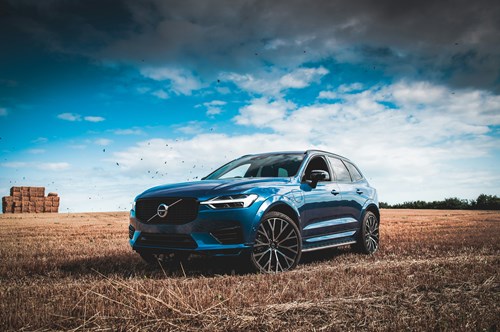
Volvo were the first manufacturer to introduce AEB as standard in 2014.
Lane keeping assistance
Lane keeping systems monitor road markings and gently steer the car back if it drifts out of its lane without indicating. Despite how it’s sometimes marketed, this isn’t self-driving. Think of it as a nudge, not a takeover.
It’s particularly useful on long motorway journeys, where fatigue can creep in without you noticing. The Department for Transport notes that lane assistance can help reduce single-vehicle run-off-road crashes.
That said, for drivers who mainly do short urban trips, it’s helpful rather than essential.
Blind spot monitoring
On a busy motorway, blind spot monitoring can stop a routine lane change from turning into something far more serious.
These systems warn you if another vehicle is sitting where the mirrors struggle to show it. On multi-lane A-roads and congested motorways, that extra layer of awareness matters.
It should never replace proper mirror checks, though. Treat it as a second pair of eyes, not a substitute.
Speed assistance and traffic sign recognition
Many modern cars can read speed limit signs and warn you if you exceed them. Some can even adjust the car’s speed automatically.
These systems are improving quickly, but they’re not infallible. Temporary roadworks, obscured signs and poor weather can all confuse them. Used sensibly, they help keep awareness high, especially on unfamiliar roads.
Child safety is more than just ISOFIX
If you regularly carry children, safety ratings deserve extra attention.
Euro NCAP’s child occupant score looks not only at crash performance using child dummies of different ages, but also at how easy and secure child seat installation is in real-world use.
ISOFIX mounting points are now common, but not all setups are equal. Some rear seats are easier to access, some allow more flexibility, and some work better with extended rear-facing child seats.
Independent organisations like Which? regularly test child seats and car compatibility, which is well worth checking if this matters to you.
Pedestrian and cyclist protection: an overlooked part of safety
Modern cars are designed not just to protect occupants, but people outside the vehicle too. This matters more than ever in towns and cities where walking and cycling are common.
Features contributing to pedestrian and cyclist protection include:
- Energy-absorbing bonnets
- Automatic braking that detects pedestrians and cyclists
- Bonnet airbags on some models, which lift the bonnet slightly on impact
These features feed directly into Euro NCAP’s vulnerable road user score. Heavier vehicles often face a tougher challenge here, which is why it’s worth looking beyond overall star ratings if you drive mainly in urban areas.
A strong score in this category is a sign of thoughtful overall safety design, not just occupant protection.
Why a five-star rating is not the whole story
A five-star rating is reassuring, but it shouldn’t end the conversation.
Two cars can both achieve five stars while offering very different levels of protection in the real world. One might scrape through with minimal safety assist performance, while another comfortably exceeds requirements across all categories.
Looking at the detailed score breakdown on Euro NCAP’s site often reveals far more than the headline number.
It’s also important to check whether optional safety packs were included in the test. Some cars only achieve their top rating when fitted with extra equipment that may not be standard on cheaper trims.
Safety Doesn't End At The Crash
Even the safest cars can still be written off. Modern vehicles are designed to absorb impact efficiently, which is excellent for occupant protection, but it also means repair costs can escalate quickly. In many cases, insurers will declare a car a total loss even after what looks like a relatively modest collision.
This is where a different kind of protection becomes relevant. Standard motor insurance typically pays out the car’s current market value, not what you paid for it. With depreciation hitting hardest in the first few years, that can leave a shortfall between your insurer’s settlement and the amount you originally paid or still owe on finance.
GAP Insurance is designed to cover that difference. If your car is written off or stolen, it bridges the gap between your motor insurer’s payout and the original invoice price or outstanding finance balance, depending on the cover type. It doesn’t replace safety features or careful driving, but it does recognise a simple reality: even well-rated cars can be involved in incidents that carry significant financial consequences.
For many drivers, especially those buying newer vehicles or using finance agreements, this kind of protection offers peace of mind that complements the physical safety built into the car itself. Just as airbags and crumple zones prepare for the worst-case scenario on the road, GAP Insurance prepares for the financial aftermath if that scenario occurs.
Read More: What Are The Main Issues Following A Car Accident?
Used cars and real-world safety trade-offs
If you’re buying used, especially on a tighter budget, compromises are almost unavoidable.
A slightly older car with excellent crash structure may lack the latest active systems. A newer budget model might offer modern technology but weaker overall protection.
There’s no perfect formula, but prioritising strong passive safety and at least basic AEB is a sensible balance. RoSPA consistently emphasises that driver behaviour still plays the biggest role in safety outcomes, regardless of technology.
As a general guide:
- Cars from the mid 2010s onwards often offer very strong structural safety
- Cars from the late 2010s onwards are more likely to include effective active systems as standard
The human factor still matters
No safety system replaces attentive driving.
Cars don’t think. They follow rules written by engineers, relying on sensors that can be confused by rain, poor road markings or unusual situations. Over-reliance on technology can create its own risks if drivers misunderstand what systems can and can’t do.
Treat driver assistance as support, not supervision. That balance is where modern safety works best.
Making sense of safety when choosing a car
When comparing cars, a simple checklist helps:
- Check the Euro NCAP rating and the year it was awarded
- Look at category scores, not just the stars
- Confirm which safety features are standard, not optional
- Think honestly about how and where you drive
A family doing short urban trips has different safety priorities than someone covering long motorway miles. Safety isn’t one-size-fits-all; it’s contextual.
Final Thoughts
Perhaps the most reassuring thing is how far car safety has come without most of us noticing. Fatality rates per mile driven have fallen dramatically over decades, helped by better vehicles, safer roads and improved awareness.
Understanding safety ratings and features isn’t about fear. It’s about clarity. Once that fog lifts, choosing a safer car becomes far less stressful and far more practical.
And that, ultimately, is what good safety information should do.
If you've enjoyed reading this, please share it with your friends! If you have any questions about safety features that we haven't covered, get in touch! Message us on social media, we're always happy to help.
Pin It!

Luke Sanderson
Luke is our resident copywriter, combining plenty of automotive experience, particularly in car sales with a commitment to well-researched, extensive writing. He draws on his own experiences, as well as quizzing the entire team at Direct Gap to ensure the blogs and articles you read are worthwhile, valuable and accurate. Got a question for Luke? Drop us a DM on social media and he'll be happy to help.