


Understanding the Paperwork Involved in Buying & Selling A Car
Quick Links
- 1 Minute Read: The Car Paperwork That Really Matters (And Why It Matters)
- Introduction
- Understanding The Paperwork Involved In Buying & Selling A Car
- The V5C Log Book: Not Proof of Ownership (But Still Crucial)
- Service History: Evidence, Not Promises
- MOT Certificates: The Car’s Annual Health Check
- HPI Checks and Vehicle History Reports
- Finance Agreements: The Bit That Often Trips People Up
- Receipts and Bills of Sale: Simple but Powerful
- Warranty Documents and Extended Cover
- Insurance and Tax: Timing Matters
- Final Thoughts
1 Minute Read: The Car Paperwork That Really Matters (And Why It Matters)
Buying or selling a car is rarely undone by the vehicle itself, it’s usually the paperwork that causes problems later. Missing documents, misunderstood finance, or incomplete records are behind many disputes, delayed payments and even cases of fraud. Knowing what truly matters upfront makes the entire process smoother and far less stressful.
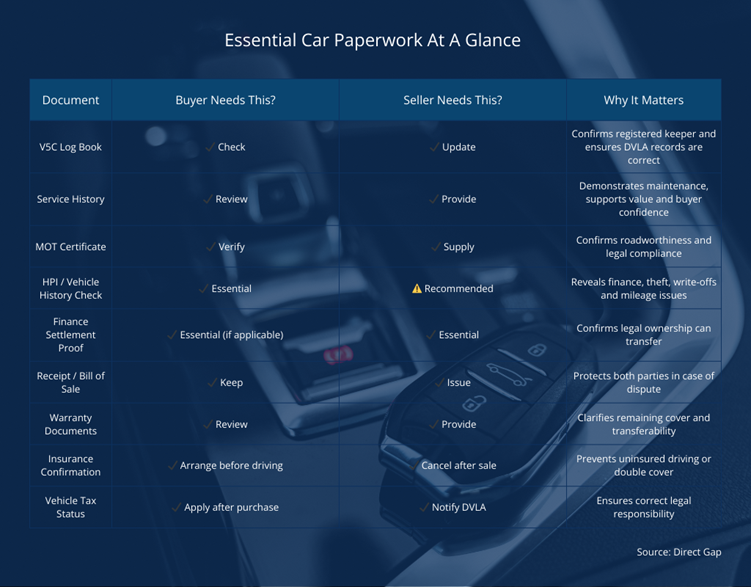
The V5C log book is one of the most misunderstood documents. It does not prove ownership, but it is essential for registering responsibility with the DVLA. Buyers should always verify the details carefully, while sellers must ensure it’s updated correctly to avoid future fines or liability.
Service history and MOT records provide insight into how a car has been cared for. Consistent servicing and clean MOT histories build confidence and support value, while gaps or repeated advisories should prompt caution or price negotiation.
Vehicle history checks, such as HPI reports, are critical. They reveal stolen vehicles, outstanding finance, write-offs and mileage issues, risks that can leave buyers legally exposed if overlooked. Finance agreements are particularly important, as cars on PCP or HP cannot legally be sold until the balance is settled.
Simple documents like receipts and bills of sale also matter more than many realise. They create a clear record of the transaction and protect both parties if disputes arise. Insurance and tax don’t transfer with the car either, so timing these correctly avoids fines and uninsured driving.
Bottom line: Car paperwork isn’t exciting, but it’s essential. Taking time to check the right documents protects your money, your legal position and your peace of mind, and can make the difference between a smooth handover and a costly headache.
Introduction
Buying or selling a car isn’t usually the hard part. That moment often comes later, when you’re staring at a small pile of documents wondering what’s essential, what’s optional, and what might come back to bite you if it’s missing. Paperwork may not be exciting, but it plays a huge role in protecting your money, your legal position and your peace of mind.
Many disputes, rejected returns, delayed payments and even cases of fraud stem not from the car itself, but from misunderstood or incomplete paperwork. Whether you’re buying privately, selling to a dealer, or part-exchanging your car, understanding the paperwork upfront makes the whole process smoother and far less stressful.
Let's look at what actually matters, why it matters, and how to avoid the most common, and costly, mistakes.
Understanding The Paperwork Involved In Buying & Selling A Car
The V5C Log Book: Not Proof of Ownership (But Still Crucial)
The V5C, often called the log book, is one of the most misunderstood documents in car buying and selling. Despite popular belief, it does not prove ownership. Instead, it records who is responsible for registering and taxing the vehicle.
According to the DVLA V5C guidance, the document confirms the registered keeper, not the legal owner. This distinction becomes critical when a car is on finance or being sold on behalf of someone else.
When buying, always check:
- The seller’s name and address match their ID
- The VIN and registration match the vehicle exactly
- The V5C isn’t marked as scrapped or exported
- The document isn’t a very recent replacement without explanation
A recently reissued V5C isn’t automatically a red flag, but it should prompt extra checks.
When selling, the V5C must be updated correctly and promptly. If you sell privately, the green “new keeper” slip should be handed to the buyer, while the rest of the change is completed online or sent to the DVLA. If you sell to a dealer, they usually handle this process, but you should still receive confirmation to ensure you’re no longer liable for tax, fines or penalties.
What Documents Do I Need When Buying a Used Car Privately?
It’s one of the most common questions buyers search before viewing a car, and for good reason. At minimum, you should see the V5C log book, a valid MOT (if the car is over three years old), service history, and a clear vehicle history report showing no outstanding finance or theft markers. You should also receive a written receipt confirming the sale.
If any of these are missing, it doesn’t automatically mean something is wrong, but it does increase your risk. When paperwork is incomplete, your level of due diligence needs to increase.
Service History: Evidence, Not Promises
A full service history isn’t legally required, but it carries significant weight in both buyer confidence and resale value. It shows how the car has been maintained, whether manufacturer schedules were followed, and how potential issues were handled.
Service records may include:
- A stamped service book
- Digital service records (now common on newer cars)
- Itemised invoices showing work carried out
Many manufacturers have moved to digital systems, which can be checked through franchised dealers or manufacturer portals such as BMW Digital Service History or Volkswagen Service Records.
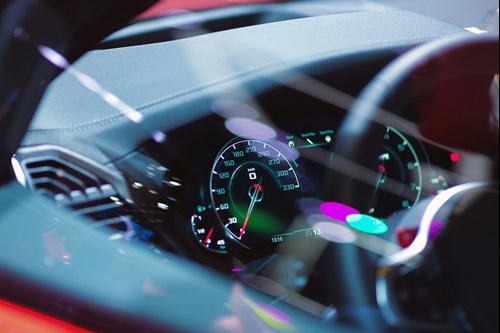
Modern cars, especially those with a 'digital dash' are moving towards digital service history too.
If you’re selling, gathering these records, even older invoices, builds credibility and often supports a higher asking price. If you’re buying, gaps in history aren’t always a deal-breaker, but they do increase uncertainty and should be reflected in the price or supported by evidence of recent maintenance.
Read More: How To Determine The Value Of Your Used Car.
MOT Certificates: The Car’s Annual Health Check
For cars over three years old, a valid MOT is a legal requirement. Buyers can check a vehicle’s MOT history for free using the UK government MOT checker, which shows passes, failures and advisory notes going back several years.
This is one of the most powerful tools available to buyers. Repeated advisories for items like tyres, brakes, corrosion or suspension can indicate deferred maintenance. Conversely, consistent passes with minor advisories often point to careful ownership.
Sellers should ensure the MOT is current, ideally with several months remaining. Buyers should never rely on a seller’s verbal reassurance when this data is publicly accessible and independently recorded.
HPI Checks and Vehicle History Reports
A vehicle history check answers some of the most important questions you can ask about a car:
- Is it stolen?
- Is there outstanding finance?
- Has it been written off or categorised as an insurance loss?
- Does the mileage follow a believable pattern?
An HPI check or equivalent report is one of the most effective ways to reduce risk. Services such as HPI Check, Experian AutoCheck and TotalCarCheck pull data from insurers, finance houses and national databases.
If you’re selling, running a check on your own car before advertising helps avoid delays or awkward conversations later. If there’s outstanding finance, it usually needs to be settled before ownership can legally transfer, even in a private sale.
Read More: Everything You Need To Know About HPI Checks.
Finance Agreements: The Bit That Often Trips People Up
Cars purchased on PCP, hire purchase or lease agreements are not owned outright until the finance is fully settled. This is one of the most common sources of confusion, and risk, in used car transactions.
If you’re buying, the MoneyHelper car finance guidance explains why purchasing a car with outstanding finance can leave you vulnerable, even if you paid the seller in good faith.
If you’re selling a car with finance:
- The balance must usually be cleared before completion
- Dealers may settle it directly as part of the transaction
- Private sales require transparency and written confirmation
Buyers should always ask for proof that finance has been settled, ideally written confirmation from the finance company, before handing over funds.
Can You Sell a Car With Outstanding Finance?
This is another frequently searched question, and the short answer is: not legally without settling it first.
If a car is on hire purchase or PCP, the finance company remains the legal owner until the agreement is fully paid off. That means the balance must be cleared before ownership can transfer. Dealers often handle this as part of the transaction, but in a private sale, the seller must provide clear proof that the finance has been settled before funds change hands.
Ignoring this step can leave buyers facing unexpected claims from finance companies later, something no one wants after collecting their “new” car.
Receipts and Bills of Sale: Simple but Powerful
A written receipt or bill of sale protects both buyer and seller. It doesn’t need to be complex, but it should clearly record the facts of the transaction.
A proper receipt should include:
- Buyer and seller names and addresses
- Vehicle details (registration, make, model)
- Sale price
- Date and time of sale
- “Sold as seen” wording for private sales
The AA bill of sale template provides a useful reference.
Warranty Documents and Extended Cover
If the car is still under manufacturer warranty, documentation confirming this should be provided, along with clarity on how long remains.
- What is covered and what is excluded
- The duration of cover
- Whether the warranty is transferable to a new owner
The Consumer Rights Act 2015 gives buyers protection when purchasing from a dealer.
Insurance and Tax: Timing Matters
Insurance and vehicle tax do not transfer with the car. This includes all types of cover including standard motor insurance, gap insurance or any other additional cover types such as tyre & alloy insurance.
Buyers must arrange insurance before driving away, even for short journeys. Sellers should cancel their insurance once the car is sold and handed over.
Final Thoughts
Car paperwork may not be glamorous, but it forms the foundation of a safe, lawful and stress-free transaction.
If you’re buying, never rush the paperwork, urgency is rarely your friend. If you’re selling, being organised builds trust and often leads to a quicker, cleaner sale.
A little preparation goes a long way, and when it comes to cars, paperwork done properly is just as important as the keys themselves.
We hope you've enjoyed reading. If you have any further questions regarding your car paperwork, get in touch! Drop us a message on socials and we'll be happy to help.
Pin It!

Luke Sanderson
Luke is our resident copywriter, combining plenty of automotive experience, particularly in car sales with a commitment to well-researched, extensive writing. He draws on his own experiences, as well as quizzing the entire team at Direct Gap to ensure the blogs and articles you read are worthwhile, valuable and accurate. Got a question for Luke? Drop us a DM on social media and he'll be happy to help.