


PCP vs Hire Purchase (HP) | Which Is Best?
Buying A New Car But Not Sure How To Finance It? Here’s Everything You Need To Know About PCP & HP.
Quick Links
1 Minute Read: PCP vs HP: Which Car Finance Option Should You Choose?
With around 80% of new UK cars purchased on finance, most buyers end up choosing between PCP (Personal Contract Purchase) and Hire Purchase, but the two options work very differently, and picking the wrong one can cost you more than you expect.
PCP keeps the monthly payments low because you only cover the car’s depreciation, not its full value. At the end you choose whether to pay the ‘balloon’ payment, hand the car back, or move into a new deal. It offers flexibility and affordability, but mileage limits, condition charges and the risk of ending up with zero equity make it less straightforward than it first appears.
HP is far simpler: you spread the full cost of the car over fixed payments and automatically own it at the end. No mileage caps, no balloon payment and fewer surprises, though the monthly payments are higher. Long-term owners and high-mileage drivers tend to get the best value with HP.
Depreciation has become more unpredictable in recent years, especially for EVs, which affects how both PCP and HP behave, increasing the importance of knowing how much you drive, how long you keep your cars, and whether equity matters to you. GAP insurance is also worth considering for either option, given the rising risk of financial shortfalls in the first few years.
Bottom line: PCP suits drivers who want low monthly payments and the freedom to change cars regularly. HP suits those who want simplicity, no mileage rules and clear long-term ownership. The right choice depends not on the car, but on how you use it.
Introduction
If you’re looking to finance a car, you’ve probably already realised just how many options are thrown at you the moment you step into a dealership. Around 80% of new cars in the UK are bought on finance, according to the Finance & Leasing Association (FLA).
Most people are deciding between PCP and Hire Purchase, but do they really understand how each option works, or how much they might cost in the long run?
Although both are useful tools, they suit very different types of drivers, and choosing the wrong one can leave you with unexpected bills, limited flexibility, or even negative equity.
What makes this choice even more important is today’s market volatility. Used car prices surged by more than 30% between 2020 and 2023, before beginning to stabilise, and this has directly affected how PCP and HP agreements behave. Depreciation patterns have shifted, interest rates have climbed, and the type of car you choose (petrol, hybrid, EV) now influences future value more dramatically than ever.
In this guide, we’re demystifying both PCP and HP, looking at how each agreement works, what it really costs and the small details that don’t always make it into the dealership sales pitch. First, though, as we always do, let’s cover some of the basics.
What Is PCP (Personal Contract Purchase)?
PCP is designed around the idea that most people don’t keep their cars for long. Instead of paying for the full value of the vehicle, you’re only paying for the part you use.
In simple terms, you cover the car’s depreciation over the length of your agreement. You pay a deposit, make monthly payments that cover the falling value, and then face a decision at the end: pay the balloon and own the car, hand it back, or put any equity toward your next one (You can read more about PCP end-of-term agreements here).
The structure is straightforward once you get the hang of it, and the MoneyHelper guide to PCP offers a clear, consumer-friendly breakdown if you want a deeper dive.
What draws people to PCP is the lower monthly cost compared with HP. For example, financing a £20,000 car on PCP might mean a £2,000 deposit and monthly payments of around £240 for four years, with a final optional payment (or GFV) of about £7,500. Those figures align with typical UK PCP structures, where manufacturers often subsidise part of the interest rate or GFV to boost affordability.
Another big appeal is flexibility. You get a nicer car for a lower monthly cost, and you don’t have to commit to owning it.
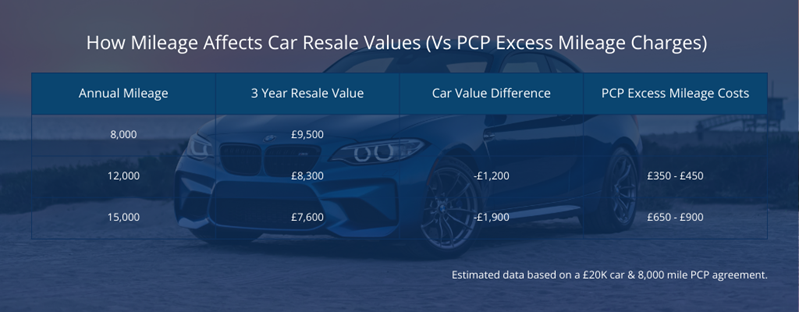
However, PCP comes with strings attached. Mileage limits are built into every agreement, usually somewhere around 6,000 to 10,000 miles a year. If you go over, you’re charged per mile, anywhere between 7p and 12p. That means exceeding your limit by just 4,000 miles could cost you £280 to £480 when you hand the car back. These charges are based on how mileage affects resale value: a car driven 12,000 miles per year instead of 8,000 typically loses £800–£1,500 more over a three-year period.
On top of that, if the car’s condition falls outside what’s considered “fair wear and tear”, you can be charged for repairs. Industry data suggests around 1 in 5 PCP returns attract some level of condition-related fee, often small, but still unexpected. And, crucially, you are not guaranteed any equity at the end. If the car loses value faster than expected, you might return it with nothing to show for it.
If you do opt for PCP, make sure you know How To Prepare Your Car For PCP End-Of-Term Inspection to reduce costs and potentially maximise your equity.
What Is Hire Purchase (HP)?
Hire Purchase is simpler and more traditional. Instead of paying for depreciation, you’re spreading the cost of the entire car. You put down a deposit, make a series of fixed payments, and once the final balance is cleared, the car becomes yours automatically. There’s no balloon payment, no mileage restrictions, and no end-of-term surprises.
The RAC’s explanation of Hire Purchase sums it up clearly; the real appeal is its predictability.
Using the same £20,000 car example, you might pay a £2,000 deposit and £360 a month for four years. The payments are higher than PCP, but the total cost over the term is often lower because there’s no large balloon waiting at the end. HP typically comes with a slightly lower APR than PCP because lenders carry less risk: the borrower repays the full value from day one, which gives the finance company more security.
HP appeals most to drivers who know they want long-term ownership or who cover high mileage, because there are no restrictions on how far you drive. It’s especially popular with people who keep their cars for five or more years, a group who, statistically, get the best value from ownership.
And, unlike PCP, the vehicle’s final value has no impact on what you owe. Whether your car is worth £3,000 or £9,000 at the end, the finance is already settled. (It’s worth remembering, though, no matter which you choose, there are steps you can take to maximise your car’s resale value.)
The Real Differences Between PCP and HP
Although both finance options get you behind the wheel, they behave very differently once you look under the surface.
One of the biggest differences is the gap between monthly affordability and long-term cost. PCP feels cheaper because the monthly payments are significantly lower, but if you eventually want to own the car, the balloon payment often makes PCP more expensive overall. HP, meanwhile, front-loads the cost into the monthly payments but rewards you later with clear ownership and no additional fees.
Mileage and condition rules also divide the two. PCP agreements are built around the car being returned in a predictable condition so it can be resold easily. That’s why mileage caps exist. The AA’s Car Valuation Tool explains why even small increases in mileage can knock value off a car, which is the logic behind PCP penalties. HP doesn’t care about mileage, which is why many high-mileage drivers prefer it.
Flexibility plays a big role, too. PCP offers more options at the end of the term, allowing you to change your car regularly. HP is less flexible but more straightforward. Once you’ve made your final payment, the car is yours, and that’s that.
Another key factor that often gets overlooked is equity. Cars typically lose around 15–35% of their value in year one, and around 50–60% within three years. Electric vehicles have seen even steeper depreciation recently, with some models losing 30–40% in a single year due to rapid technological change and shifting incentives.
That depreciation can make it difficult to build equity through PCP unless the car holds its value unusually well. For example, a car worth £20,000 today might be worth around £9,000 after three years. If you still owe £9,500 on your PCP balance at that point, you’d actually be in negative equity. HP tends to build equity faster simply because you’re repaying the full value rather than just the depreciation, meaning you owe less relative to the car's real-world market value as time passes.
Gap Insurance And Negative Equity
Whichever finance method you choose, GAP insurance is something worth understanding. In the event of a write-off or theft, your car insurer only pays the vehicle’s current market value, not your outstanding finance balance. With PCP in particular, where the balloon payment can be substantial, this gap can be significant.
As we’ve discussed, the average UK car depreciates by 20–25% in the first year alone, meaning a £20,000 car could be worth just £15,000 after twelve months. If you still owe £17,000 on your PCP or HP agreement, you’d be exposed to a £2,000 shortfall without GAP cover.
For more information, check out our Complete Gap Insurance Guide.
Which Finance Option Suits You Best?
There isn’t a single “correct” choice; it depends entirely on how you use your car and what you want out of the finance agreement.
If you like the idea of lower monthly payments and changing your car every few years, PCP is likely the better fit. People who enjoy upgrading regularly or who prefer having multiple options at the end of the agreement often find PCP more appealing. That said, if you drive more than average, PCP’s mileage caps can become expensive, and the possibility of end-of-term fees is worth considering.
If you value simplicity, want to avoid mileage restrictions, or plan to keep your car long-term, HP usually works out better. Many drivers appreciate knowing that every payment takes them one step closer to full ownership without any surprises waiting at the end. Owners who keep cars for six to eight years, which is close to the UK average ownership cycle, almost always see better total-cost value with HP than with PCP-to-PCP rolling agreements.
Final Thoughts
Ultimately, both PCP and HP have their strengths. PCP is a flexible, affordable way to drive a newer car without committing to long-term ownership. HP is a straightforward path to owning your car outright, with no mileage caps and no end-of-term uncertainty. The best choice depends on how long you keep your cars, how much you drive, and how important predictable costs are to you.
Pin It!

Luke Sanderson
Luke is our resident copywriter, combining plenty of automotive experience, particularly in car sales with a commitment to well-researched, extensive writing. He draws on his own experiences, as well as quizzing the entire team at Direct Gap to ensure the blogs and articles you read are worthwhile, valuable and accurate. Got a question for Luke? Drop us a DM on social media and he'll be happy to help.